How to Increase Your Credit Score 50 Points Before Buying a House
This strategic plan to increase your credit score by 50 points before a home purchase involves minimizing credit utilization, ensuring 100% on-time payments, and actively disputing errors using a dedicated monitoring tool
Your Urgent Guide to Boosting Your Credit Score for a Better Mortgage Rate
The dream of homeownership often hinges on one crucial number: your credit score. A difference of just 50 points can translate into thousands of dollars saved on interest over the life of a mortgage. If you're looking to buy a house soon and need to boost your credit score quickly and effectively, you're in the right place.
This guide provides an actionable, step-by-step plan to potentially increase your credit score by 50 points or more, helping you secure the best possible mortgage rates and terms.
Why Every Credit Point Matters for Homeownership
Before diving into the "how," understand the "why." Mortgage lenders use credit scores to determine your loan eligibility and, more importantly, your interest rate. Even a small increase in your score can move you into a better rate tier.
The 6-Step Plan to Boost Your Credit Score 50+ Points
To achieve a significant credit score increase in a relatively short timeframe (typically 3-6 months), you need a targeted and consistent strategy.
.avif)
Step 1: Get Your Credit Reports & Scores from All 3 Bureaus
This is your crucial starting point. You can't improve what you don't know. You need a detailed look at your credit history from Experian, Equifax, and TransUnion.
- Why it helps: You'll identify potential errors, understand what's impacting your score, and see how lenders view you.
- Action: Access your reports. SmartCredit provides all three credit reports and scores in one place, along with daily monitoring, making this step efficient. This allows you to immediately see discrepancies and track changes.
Step 2: Dispute Any Errors Immediately
Even minor inaccuracies on your credit report can drag down your score. This is one of the fastest ways to gain points.
- Why it helps: Correcting a wrongly reported late payment, an incorrect balance, or an account that doesn't belong to you can immediately boost your score by removing negative marks. Correcting errors on your credit report can quickly improve your credit score.
- Action: Review every detail. SmartCredit's Dispute Center can help you identify and challenge inaccurate information directly from their platform, streamlining a process that can otherwise be confusing.
Step 3: Pay Down Revolving Credit Balances (Especially Credit Cards)
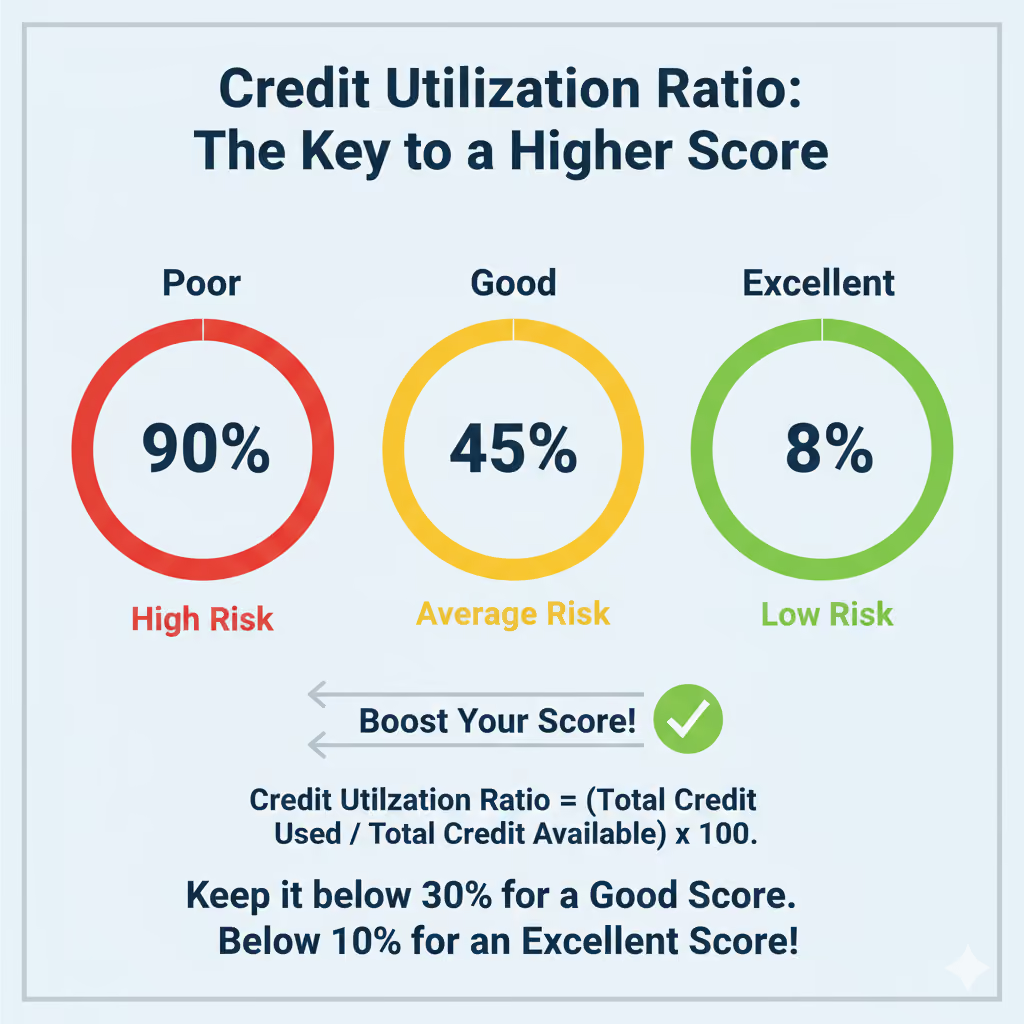
Your credit utilization ratio (how much credit you're using vs. how much you have available) is a huge factor in your score. Aim for a low ratio.
- Why it helps: Lenders prefer to see you using less than 30% of your available credit. Getting below 10% is even better for maximizing your score. This has a significant, often rapid, positive impact.
- Action: Prioritize paying down credit card balances. If possible, pay off the entire balance, or at least get it below 10% of the limit. If you have multiple cards, focus on those with the highest utilization.
Step 4: Become Obsessed with On-Time Payments
Payment history is the most important factor in your FICO score (accounting for about 35%). A single 30-day late payment can severely damage your score.
- Why it helps: Achieving 100% on-time payments demonstrates responsibility, which lenders reward. For the next 3-6 months leading up to your mortgage application, flawless payment history is non-negotiable.
- Action: Set up auto-pay for all bills (credit cards, loans, utilities) to ensure you never miss a deadline. If you've had a recent late payment, the best strategy is to establish a new, long streak of on-time payments.
Step 5: Stop Opening or Closing Accounts
During the period just before applying for a mortgage, avoid any actions that could introduce volatility or uncertainty to your credit profile.
- Why it hurts to open new accounts: A new credit card application generates a hard inquiry, which can temporarily drop your score by a few points. It also lowers the average age of your credit history, another scoring factor.
- Why it hurts to close old accounts: Closing an old, paid-off credit card reduces your total available credit, which instantly increases your credit utilization ratio (Step 3).
- Action: Maintain the status quo. Freeze major credit decisions until after your mortgage closes.
Step 6: Use Credit Monitoring to Track Progress Daily
Boosting your score is not a passive task. You need a dedicated tool to track results, identify new risks, and guide your next moves.
- Why it helps: Credit reporting is a delayed process. You need real-time data to know if your paydown strategies (Steps 3 & 4) are working and to quickly catch any new negative items or fraudulent activity.
- Action: Utilize a robust platform like SmartCredit. Its core value is giving you the tools to take action. You can monitor all three reports daily, see exactly who is looking at your credit, and utilize their advanced features to maintain your score as you approach closing.
Your Next Step: Access Your Personalized Plan
Don't guess what your score needs. Use a tool designed for action.
SmartCredit is the optimal solution for pre-mortgage credit optimization because it combines three essential services:
- 3-Bureau Reports and Scores: Know exactly where you stand.
- Dispute Center: Quickly fix errors that drag your score down.
- Daily Monitoring: Track the impact of your actions in real-time.
Start your 50-point boost today and secure the best rate for your future home
For a limited time, you can try SmartCredit for 7 days for just $1!